
Quick Answer
You may have an ant infestation if you are seeing live ants inside your house regularly, established ant trails keep returning, ants are appearing in several rooms, or they are repeatedly emerging from walls, cupboards, skirting boards or other hidden areas.
Other common ant infestation signs include:
- Large or increasing numbers of ants indoors
- Visible trails between food sources and entry points
- Ants returning after DIY sprays or baits
- Activity around kitchen benches, pantries or pet food
- Ants disappearing into wall cavities or roof spaces
- Small piles of soil, sand, dead ants or nest debris
- Heavy ant activity around paving, gardens or foundations
- Winged or flying ants appearing indoors
One or two ants do not necessarily mean your house is infested. What I look for is consistent, organised and recurring ant activity.
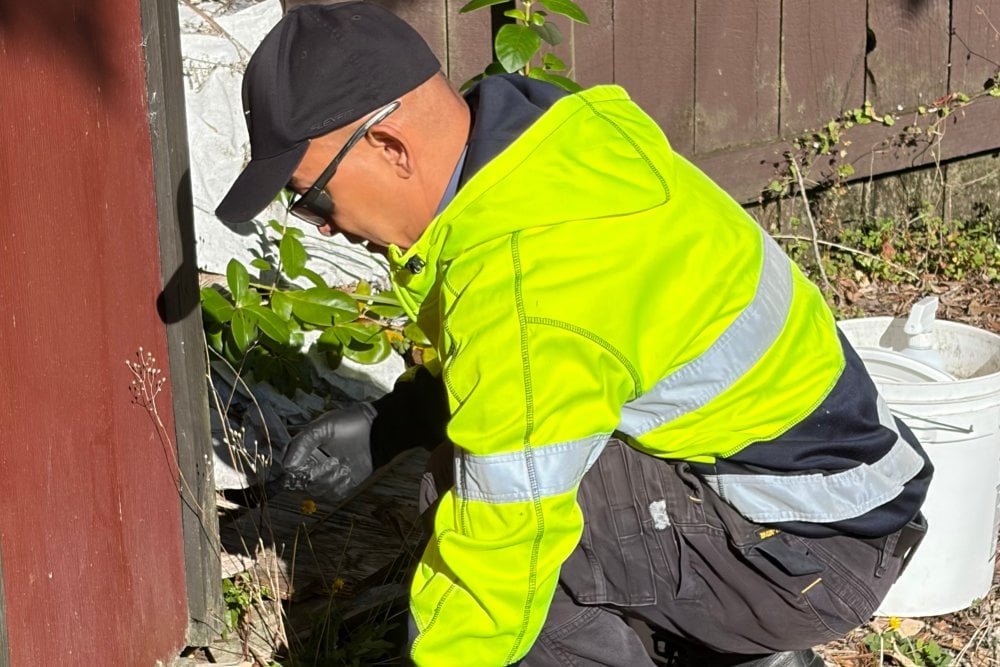
After more than 20 years working in pest control, I have found that the biggest mistake homeowners make is concentrating on killing the ants they can see without working out where those ants are coming from. AlphaPest identifies Lloyd Carpenter as its lead Auckland exterminator and a qualified Urban Pest Manager with more than 20 years of industry experience.
The ant nest could be inside your house, beneath paving, in the garden or even beyond your property boundary. The key is identifying the ant species, following the ant pathways and understanding the wider colony before deciding how to control it.
Are Ants Appearing Again and Again?
If you are seeing established ant trails, ants in several rooms or activity that keeps returning after DIY treatment, AlphaPest can help identify the species and determine the most appropriate treatment.
Book Professional Ant Control With AlphaPest
We provide ant pest control across West Auckland, Central Auckland, the North Shore, East Auckland and South Auckland.
What Are the Signs of an Ant Infestation?
The question I often get asked is:
“How do I know if my house is infested with ants, rather than just having a few ants coming inside?”
The answer usually comes down to frequency, numbers and patterns.
A single ant crossing your kitchen bench may simply be a scout looking for food.
A steady line of worker ants travelling across that same bench every morning, disappearing into the same crack and returning every time you remove them is a very different situation.
Here are the signs I recommend looking for.
1. You Keep Seeing Live Ants Inside Your House
Frequent sightings of live ants indoors are usually the first warning sign.
Pay particular attention if ants regularly appear around:
- Kitchen benches
- Pantries
- Food cupboards
- Sinks
- Dishwashers
- Pet feeding areas
- Rubbish or recycling
- Bathrooms
- Laundries
- Window sills
- Skirting boards
Seeing one or two ants once is not enough for me to call it an infestation.
Seeing ants every day or repeatedly over several weeks is different.
That usually means foraging ants have found something worthwhile inside your home and established a reliable route between that resource and their colony.
Watch the ants before you remove them
Before wiping them away, take a minute and watch.
Ask yourself:
Where are they coming from?
Look for gaps around skirting boards, windows, doors, cabinetry, pipes or other entry points.
Where are they going?
They may be heading towards crumbs, pantry food, pet food, water or another food source.
Are they following the same route?
If they are, you are probably looking at an established ant pathway rather than random activity.
2. You Can See Established Ant Trails
One of the clearest signs of an ant infestation is a visible trail.
Worker ants do not wander around randomly once a reliable food source has been found.
A scout that locates food can lay down a pheromone trail, an invisible chemical route that helps other worker ants navigate between the food and the nest. As more ants use a productive route, the visible trail can become increasingly obvious. AlphaPest identifies established pheromone trails as one of the key warning signs we look for when assessing an ant problem.
You may see ant trails:
- Along countertops
- Around skirting boards
- Across floors
- Around window frames
- Up exterior walls
- Beneath doors
- Across paving
- Along fences
- Between garden areas and your house
Follow the trail in both directions
This is one of the simplest things homeowners can do before reaching for a spray.
Follow the ants.
One direction usually leads towards food or moisture.
The other direction may lead towards:
- A crack or gap
- An exterior entry point
- A wall cavity
- Paving
- A garden bed
- A retaining wall
- A possible nest site
The trail often tells me much more about the specific infestation than killing the individual ants.
Keep Finding the Same Ant Trail?
Repeatedly wiping or spraying a trail may remove the ants you can see without dealing with the colony producing them.
AlphaPest can inspect the activity, identify the ant species and recommend a colony-focused ant control strategy.
Request an AlphaPest Ant Treatment
3. Ants Keep Coming Back After You Kill Them
This is one of the biggest indicators of a larger ant infestation.
You spray the ants.
They disappear.
A few days later, they are back.
Sometimes it is the same trail. Sometimes another trail appears somewhere else.
The reason is straightforward.
The ants walking across your kitchen are usually worker ants or foraging ants. They are only one part of a social colony containing workers, developing young and one or more reproductive ants, depending on the species.
Killing the visible workers does not automatically eliminate the ant nest.
That is why repeatedly killing all the ants you can see can provide short-term relief while doing little to gain control of the underlying problem.
Different ant species can also behave very differently when disturbed, which is why identification matters before choosing a treatment. New Zealand currently has 38 confirmed ant species across 23 genera, and most of the pest ants encountered here are introduced rather than endemic species.
Why DIY products sometimes fail
There is nothing inherently wrong with DIY solutions for a very small, isolated ant problem.
The issue is when homeowners cycle through:
- Surface sprays
- Random bait stations
- Ant killer gel
- Powder
- Different supermarket products
without identifying the species or finding out where the colony is located.
An ant bait that works well for one species or feeding preference may not be the right approach for another.
At AlphaPest, ant control starts with inspection and species identification, followed by a treatment plan based on what we find. Our treatments may use baits, sprays or other targeted methods depending on the infestation.
4. Ants Are Appearing in Several Rooms
When someone tells me:
“They started in the kitchen, but now we are seeing them in the bathroom, laundry and bedrooms.”
I start thinking about the wider property rather than one isolated food source.
Ant activity across several internal areas can suggest:
- Multiple entry points
- An established nearby colony
- Several connected nests
- Ants using wall or ceiling voids as pathways
- More than one food or moisture source
It does not automatically mean you have millions of ants living inside the house.
It does mean there is enough organised activity to justify investigating further.
Keep a simple ant activity log
You do not need anything complicated.
Write down:
- Date
- Time
- Location
- Approximate number of ants
- Where they appear to enter
- Where they are travelling
- Nearby food or water
Take photos of visible trails as well.
Patterns often become obvious once you stop looking at each sighting as a separate event.
5. Ants Are Emerging From Walls, Cupboards or Roof Spaces
Another common sign of an ant infestation is ants repeatedly appearing from hidden parts of the building.
You might see them coming from:
- Beneath skirting boards
- Behind kitchen cupboards
- Around window sills
- Pipe penetrations
- Wall gaps
- Ceiling fittings
- Roof spaces
- Subfloor areas
This does not necessarily mean the colony is inside that exact wall.
Ants may simply be using cavities and gaps as protected pathways between an outdoor nest and an indoor food source.
However, some ant species do nest inside buildings.
For example, Manaaki Whenua records the white-footed ant, Technomyrmex jocosus as nesting in places including wall cavities while also forming long foraging trails and entering houses in search of food and water.
Auckland homeowners therefore should not assume that sealing the visible hole will solve the problem.
You need to understand where the ants are travelling from, not just where you see them emerging.
6. You Find Small Piles of Soil, Sand or Ant Debris
Sometimes the clearest evidence of an ant nest is not the ants themselves.
Look for small piles around:
- Paving
- Driveways
- Concrete cracks
- Garden borders
- Foundations
- Exterior walls
Certain ground-nesting ants move soil as they expand their nest.
At AlphaPest, we commonly associate small mounds of fine soil around paths, driveways and paving gaps with possible underground nesting activity. Coastal Brown Ants, also called Big-Headed Ants, are one species we assess when this type of activity is present.
You may also find:
- Dead ants
- Insect fragments
- Fine nest debris
beneath light fittings or other openings.
AlphaPest has found nests in places including lawns, wall cavities, beneath paving, garden beds and ceiling spaces.
A small pile of debris does not identify the species by itself, but it is another clue worth adding to the bigger picture.
7. You Find Ants Around Food Preparation Areas
Ant activity in kitchens, pantries and areas where you prepare food should not be ignored.
Ants are attracted to accessible food sources such as:
- Sugar
- Sweet spills
- Grease
- Protein residues
- Pet food
- Food waste
Finding worker ants around food does not automatically tell us where the nest is, but repeated activity tells us the colony has found a reliable resource.
There is also a hygiene reason to deal with persistent indoor ant activity.
Research has demonstrated that ants can carry microorganisms and, under experimental conditions, can transfer bacteria such as E. coli to food-contact surfaces. This does not mean every ant in an Auckland kitchen carries harmful bacteria, but it supports treating recurring pest activity around food preparation and storage as a hygiene concern rather than simply a nuisance.
AlphaPest also treats ants in food storage areas as a clear indicator of an active colony nearby.
8. You See Flying Ants or an Ant Swarm Indoors
Another sign homeowners sometimes miss is flying ants.
Winged ants are reproductive members of mature ant colonies. At certain times, males and new queens can leave established colonies to mate and establish new nest sites.
Seeing one winged insect near an open window does not automatically mean your house contains a nest.
However, large numbers of flying ants emerging from inside the building deserve investigation.
University of Minnesota Extension notes that winged ants swarming indoors can indicate an indoor ant nest, particularly where they are clearly emerging from within the structure rather than simply flying in from outside.
Take a photo before vacuuming them up.
Correct identification matters because winged ants can also be confused with other insects.
Seeing Ants Coming From Walls or Swarming Indoors?
Hidden ant activity can be difficult to diagnose from the visible insects alone.
AlphaPest can inspect likely nesting areas, entry points and ant pathways to determine what species is involved and what treatment is appropriate.
Get Professional Help From AlphaPest
Does Seeing a Few Ants Mean My House Is Infested?
No.
This is an important distinction.
I would not tell someone they have a serious ant infestation because they spotted two ants on a windowsill.
Instead, I look at five things.
Frequency
Are you seeing ants once or repeatedly?
Numbers
Are you seeing isolated ants or increasing numbers of live ants?
Trails
Are they moving randomly or following clear, established ant pathways?
Recurrence
Do they keep returning after you remove them?
Spread
Are ants confined to one area or appearing throughout the house?
The more consistent, organised and widespread the ant activity, the more likely we are dealing with an established colony rather than the occasional scout.
How Do I Find Out Where the Ants Are Coming From?
My first advice is simple.
Do not immediately spray them. Follow them.
Start where you see the most activity
Usually that is the kitchen.
Check:
- Pantry shelves
- Beneath the fridge
- Behind appliances
- Pet feeding areas
- Rubbish bins
- Recycling
- Under sinks
- Dishwashers
Foraging ants are usually travelling with a purpose.
Try to find where the trail disappears.
Check water as well as food
Food is not the only thing that can attract ants.
Check:
- Bathrooms
- Laundries
- Leaking taps
- Pipework
- Damp cupboards
- Condensation-prone areas
Removing accessible food and water can make the property less attractive, but it will not necessarily eliminate an established colony.
Follow the route outside
If the ants disappear towards an exterior wall, inspect the corresponding area outdoors.
Look around:
- Foundations
- Paving
- Doors
- Windows
- Utility penetrations
- Gardens
- Retaining walls
- Decks
Often what looks like an indoor ant infestation begins with an outdoor colony that has established a reliable pathway into the house.
Which Ant Species Commonly Cause Problems Around Auckland Homes?
Different ant species behave differently.
That matters.
The species can influence:
- Where the ants nest
- What they feed on
- How far they forage
- How their colonies are structured
- Which treatment is most appropriate
This is why species identification is the first stage of AlphaPest’s professional ant control process.
Argentine Ants
Argentine ants are one of the most important invasive ants we encounter in Auckland.
They are generally:
- Around 2 to 3 mm long
- Honey-brown
- Seen moving in dense, highly organised trails
The Department of Conservation records Argentine ants in many parts of Auckland and notes that their nests can cooperate to form large interconnected super-colonies. Their trails can appear several ants wide, almost like a multi-lane motorway.
That behaviour is one reason Argentine ant control can be difficult.
The ants you see entering one Auckland house may be part of a colony network extending well beyond that individual nest site or property.
For a larger Argentine ant infestation, simply treating the visible ants at one entry point may not provide effective long-term control.
DOC recommends bait and pesticide-based management for Argentine ants and notes that larger super-colonies may sometimes require coordinated control across a wider area.
White-Footed Ants
White-footed ants are another species relevant to household ant problems in northern New Zealand.
They can:
- Form long foraging trails
- Enter houses looking for food and water
- Nest in protected areas
- Establish nests within wall cavities
Manaaki Whenua records Technomyrmex jocosus in New Zealand and notes its association with wall cavities and household foraging.
These ants demonstrate why assuming every infestation is coming from beneath the garden can be a mistake.
Sometimes the colony inside or around the building requires a very different approach from an outdoor-nesting species.
Coastal Brown Ants
The Coastal Brown Ant, also known as the Big-Headed Ant, is another species we look for around Auckland properties.
One clue can be fine soil pushed up through:
- Cracks in paving
- Driveway gaps
- Concrete joins
- Garden edges
At AlphaPest, we commonly associate this type of soil disturbance with possible underground Coastal Brown Ant nesting activity.
Again, identification matters.
A brown ant beneath paving should not automatically be treated the same way as Argentine ants forming extensive foraging trails through several neighbouring properties.
Not Sure Which Ant Species You Have?
You do not need to become an ant expert before asking for help.
Take clear photos of the ants and their trails, note where they are appearing, and let AlphaPest assess the problem.
Correct identification helps us choose a treatment suited to the specific infestation, rather than guessing.
Request an Ant Control Assessment
Can Ants Live Inside Your Walls?
Yes, some ants can nest within buildings.
But there is an important distinction between ants living in a wall and ants simply travelling through a wall.
I become more suspicious of indoor nesting when:
- Ants repeatedly emerge from the same internal opening
- There is no obvious outdoor trail
- Activity continues after accessible food is removed
- Several rooms are connected by similar activity
- Ants appear from ceilings, cabinetry or subfloor areas
White-footed ants are one example of a species documented nesting within wall cavities.
But other ants may be nesting outside and simply using cracks, voids and dark places inside the structure as protected routes.
This is why an ant inspection should look beyond the single place where you spotted the ants.
How AlphaPest Inspects an Ant Infestation
When we investigate an ant problem, I am trying to answer several practical questions:
- What ant species are we dealing with?
- Where are the worker ants coming from?
- Where are they feeding?
- Where is the likely nest site?
- Is the activity mainly inside or outside?
- How extensive is the colony?
An AlphaPest ant inspection may involve assessing:
- Visible trails
- Food sources
- Kitchens and pantries
- Bathrooms and moisture sources
- Entry points
- Exterior walls
- Paving
- Gardens
- Likely nesting areas
- Wall, ceiling, or subfloor activity where relevant
Our current ant control process starts with a property inspection to determine the extent of the infestation and identify the species. We then develop a treatment plan around what we find.
That species-led approach is important because different ant species can require different control methods. New Zealand local government pest guidance likewise emphasises correct identification as a key part of effective ant control.
Should I Spray Ants If I Think My House Is Infested?
This is where I recommend caution.
A spray can kill ants that contact it.
But if your goal is to control ants across the wider colony, killing individual worker ants is not necessarily enough.
In some situations, indiscriminate spraying can also interfere with established foraging behaviour before you have identified where the ants are travelling.
For white-footed ants specifically, Tasman District Council warns that spraying external trails can disrupt outdoor foraging routes and potentially encourage ants to search for alternative food sources indoors.
That does not mean sprays never have a place in professional ant control.
They can.
AlphaPest uses combinations of ant baits, targeted sprays, and other methods depending on the species, location, and severity of the infestation.
The important difference is using treatment as part of a broader control strategy, rather than automatically spraying every ant you see.
Do Ant Baits Work?
Ant baits can be extremely useful when they are matched to the right species and situation.
The basic principle is to use the natural behaviour of foraging worker ants.
Workers interact with or collect an attractive bait and can help distribute the treatment within the colony.
However, not all ants have the same feeding preferences or colony structure.
That means the best bait can vary.
A supermarket bait station or ant killer gel may work well in one situation and provide little improvement in another.
Manaaki Whenua’s Argentine ant control guidance documents different bait formulations and notes that particular protein-based baits can be useful for targeting Argentine queens and larvae, while the timing and scale of application are important to successful population control.
At AlphaPest, we therefore do not treat every ant problem with one standard product.
Identify first. Treat second.
How Can I Make My House Less Attractive to Ants?
Professional treatment works best when you also remove the things helping ants establish reliable pathways into your home.
Keep food in sealed containers
Pay particular attention to:
- Sugar
- Cereals
- Baking ingredients
- Pet food
- Open packets
Clean food preparation areas
Promptly remove:
- Crumbs
- Grease
- Sweet spills
- Food residue
Remember to clean beneath appliances as well.
Remove easy water sources
Fix:
- Dripping taps
- Leaking pipes
- Persistent moisture problems
Manage pet feeding areas
Clean around bowls and remove leftover food where practical.
Seal appropriate entry points
Once active pathways and nest locations have been properly considered, inspect:
- Window frames
- Door frames
- Pipe penetrations
- Cracks
- Utility openings
Sealing entry points can help with preventing ants from using established routes, but sealing the first visible gap without understanding the infestation may simply cause ants to find another route.
Maintain the exterior
Trim vegetation away from the house where practical and check:
- Paving
- Mulch
- Pot plants
- Gardens
- Retaining walls
for new ant trails.
These prevention measures align with AlphaPest’s current advice to reduce access through cracks and gaps, keep food sealed, address water sources, and trim vegetation away from exterior walls.
When Should I Call AlphaPest About an Ant Problem?
You probably do not need professional pest control because you saw one ant walking across a windowsill.
I recommend getting professional help when you are seeing clear signs of an established infestation.
Ants are appearing every day
Repeated activity means your property is probably providing a reliable resource or pathway.
Visible trails keep returning
Especially when the same trail comes back after cleaning or DIY treatment.
Ants are appearing in several rooms
This can indicate a larger ant infestation or several routes through the building.
Ants are emerging from walls or ceilings
Hidden activity deserves investigation before repeatedly spraying or sealing openings.
You are seeing flying ants indoors
Particularly when they appear to be emerging from within the structure.
You cannot locate the nest
Where you see ants is not necessarily where they live.
DIY products are not gaining control
If you have already tried several sprays, bait stations, or ant killer gel products and activity continues, it is time to step back and identify why.
You suspect Argentine ants
Dense honey-brown trails may indicate Argentine ants, an invasive species capable of forming extensive cooperative super-colonies.
DIY Ant Control Not Working?
If the ants disappear for a few days and then return, you may only be treating the worker ants rather than the wider colony.
AlphaPest provides professional ant extermination throughout Auckland, with treatment based on the species, property and extent of the infestation.
Phone: 09 887 9393
Email: office@alphapest.co.nz
So, How Do I Know If My House Is Infested With Ants?
After more than 20 years working in pest control, my advice is to look for patterns, not individual ants.
A few scattered ants may simply be scouts.
An ant infestation becomes much more likely when you have:
- Repeated live ants indoors
- Established pheromone trails
- Ants returning after DIY treatment
- Activity across several rooms
- Ants emerging from walls or hidden areas
- Soil or nest debris appearing around the property
- Flying ants emerging indoors
- Heavy outdoor activity connected to the house
The nest could be inside your home.
It could be under your paving.
It could be somewhere in the garden.
Or, with invasive species such as Argentine ants, the colony network may extend well beyond a single property. DOC confirms that Argentine ant nests can cooperate to create dense interconnected super-colonies.
The important thing is to work out:
- Which ants are they?
- Where are they coming from?
- What is attracting them?
- Where is the wider colony?
That is the difference between repeatedly killing the ants you see and actually developing a strategy to gain control of the infestation.
At AlphaPest, we provide professional ant control and pest control across Auckland, including West Auckland, Central Auckland, the North Shore, East Auckland, and South Auckland.
If ants keep returning and you are unsure whether you have an established infestation, get in touch with our team. We can help identify the species, assess the activity and recommend the right treatment for your property.
Lloyd Carpenter
Lead Exterminator & Qualified Urban Pest Manager
AlphaPest
Frequently Asked Questions
The strongest signs are recurring ants indoors, established ant trails, activity in several areas and ants that continue returning after cleaning or DIY treatment. Ants consistently emerging from walls, ceilings or other hidden areas can also indicate a nearby or internal nest.
Common signs include live ants appearing regularly, visible trails, ants around food sources, activity through entry points, soil or nest debris and repeated sightings after treatment.
There is no specific number. Two isolated ants may simply be scouts, while a steady trail of worker ants appearing every day is a much stronger indication of an established colony.
No. Many ants nest outdoors and enter houses to find food or water. Other species can nest in wall cavities and other protected areas. The location where you see ants is not always the location of the nest.
Worker ants can use pheromone trails to help other ants locate reliable food sources. Once an ant pathway becomes established, you may see repeated traffic along the same surfaces or entry points. AlphaPest identifies these visible trails as an important sign of an active ant problem.
Flying ants can be reproductive ants leaving a mature colony. A few flying ants outdoors may be normal seasonal activity, but a swarm emerging from inside a building can indicate an indoor nest.
A spray may kill visible worker ants without eliminating the colony. If the nest remains active, more workers can continue using established pathways. Treatment strategy should therefore consider the species, nest location and extent of the infestation.
Ants moving through kitchens and food-storage areas can create a hygiene concern. Laboratory research has shown ants can carry microorganisms and transfer bacteria to food-contact surfaces under study conditions.
Argentine ants are established in many parts of Auckland. They are small, honey-brown ants known for dense trails and their ability to form cooperative super-colonies.
It depends on the species and infestation. Baits can be very effective for some colonies because they use ant foraging behaviour to distribute treatment, while targeted sprays and other methods may also form part of the control plan. Correct species identification should come first.
Professional treatment is worth considering when ants appear repeatedly, established trails keep returning, activity has spread through several areas, ants appear to be nesting within the building or DIY solutions are not providing lasting control.
Yes. AlphaPest provides professional ant control across Central Auckland, West Auckland, the North Shore, East Auckland and South Auckland.
About the Author
Lloyd Carpenter, AlphaPest Lead Exterminator

Lloyd Carpenter is AlphaPest’s lead Auckland exterminator and a qualified Urban Pest Manager with more than 20 years of pest control experience. He has managed a wide range of residential and commercial pest problems throughout Auckland, including complex infestations that require careful identification, investigation, and targeted treatment.
Lloyd leads AlphaPest’s practical approach to pest management: understand the pest, identify why it is there and use the right treatment for the actual problem rather than relying on a one-size-fits-all solution.


